Guess The Drawing
- 4.5
- Rating
- 10.00M
- Installs
- Free
- Price
 Analysis by App-foxy
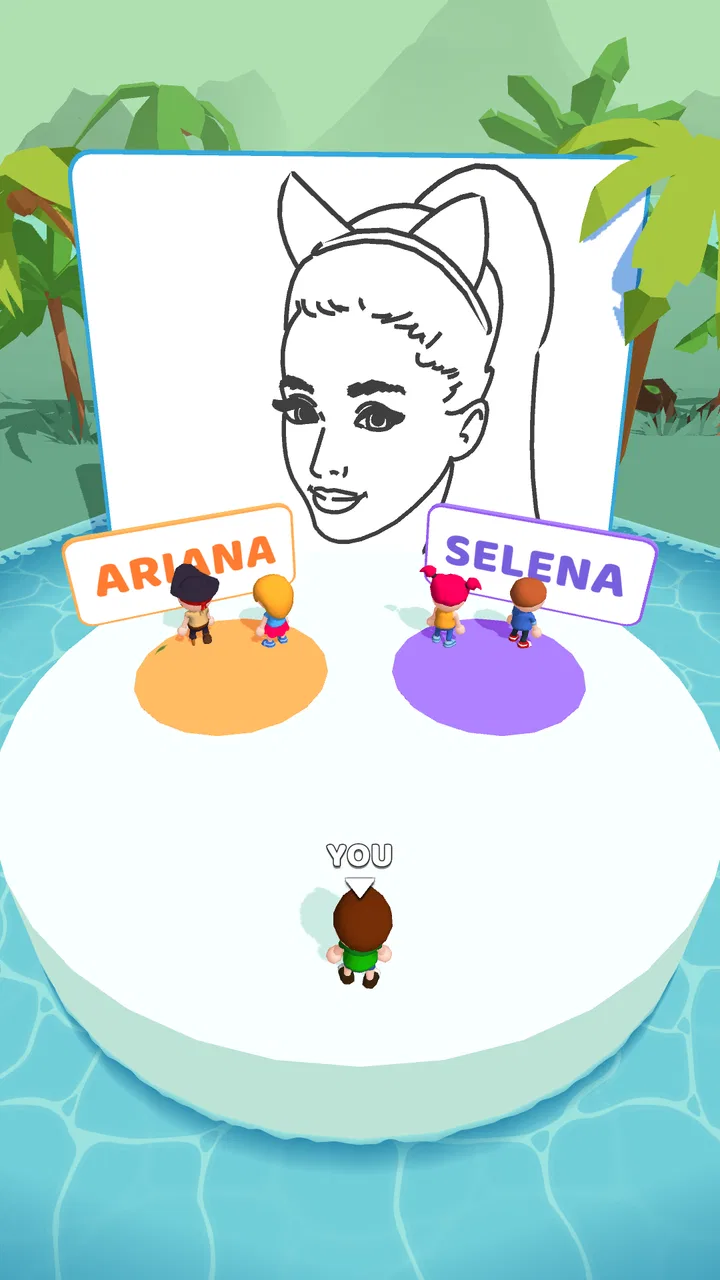
I spent time with Guess The Drawing as a quick, visual trivia game, and my first impression was clear: it is built around one simple question—can I recognize an image before everyone else does? That idea makes it easy to understand within seconds, but the real appeal comes from the pressure of making a fast guess when the drawing is still taking shape.
It comes from Supersonic Studios LTD and sits in the trivia category rather than trying to be a full puzzle adventure or a traditional quiz show. The store summary, “Last one standing wins!”, captures the competitive direction, while the short description, “Guess Drawing,” points to the central action without explaining every detail. I found that simplicity useful because I could start playing without learning a complicated rule set first.
The game is free to download and is rated for Everyone, so it is easy to consider for casual play with younger players or family members. It supports Android 7.0 and later, and the current version is 2.4. Its release date was January 7, 2022, and the game has reached over 10 million installs. Those details suggest that it is designed for broad, accessible play rather than for a small audience of specialist trivia fans.
You May Also Like

 Pandora - Music & Podcasts
Pandora’s Music Is Easy to Start, but Harder to Recover
Pandora’s strength is its low-effort path from a seed to a station. Its weak spot is how much confidence it asks you to place in connection, setup, and quiet recovery.

 8 Ball Pool
 Is Built on Rivalries, Rematches, and Routine
A close look at the rivalries, rematches, shared routines, and unanswered safety questions that turn a quick pool match into a persistent mobile community.

 Samsung Music
’s Quiet Strength Is Playing What You Already Own
Its reach comes less from spectacle than from dependable access to a personal library. That simplicity is both the app’s strongest retention engine and its ceiling.

 AccuWeather: Weather Radar
AccuWeather Review: A Quick, Clear Forecast for Everyday Decisions
For everyday plans, the best forecast is the one you can understand quickly. AccuWeather makes rain timing, radar, and local conditions easy to act on, with a few trade-offs.

 Hill Climb Racing
Why Hill Climb Racing Still Turns Crashes Into One More Run
A tiny car, a bumpy hill and one more upgrade: Hill Climb Racing keeps resurfacing because its simple chaos makes every near-miss feel personal.

 AliExpress - Shopping App
AliExpress Makes Global Shopping Feel Personal, but Shoppers Bear the Risk
AliExpress turns a global marketplace into a pocket-sized discovery engine. Its reach is useful, its shopping loop compelling, and its trade-offs easy to miss.
More From Our News Desk
View All News


How the drawing-based challenge feels in practice
I find the drawing-based challenge most enjoyable when I treat each round as a quick decision rather than a test of perfect certainty. A useful habit is to name the broad category in my head first, then wait for one detail that confirms it before committing; that can curb impulsive guesses without making me overthink. The next section looks at how readable presentation and straightforward navigation shape that experience.
A visual guessing game that rewards timing
The important difference between this and a normal trivia app is that the answer is not presented as a written question with several obvious choices. The challenge is visual. I have to interpret a drawing, connect it with a likely object or idea, and decide whether my guess is strong enough to make before the opportunity disappears.
That creates a different kind of tension from a standard multiple-choice quiz. In a conventional trivia game, I can often eliminate wrong answers or rely on a fact I remember. Here, recognition and timing matter more. A rough image may become obvious after a few lines, but waiting for certainty can be costly when the game is built around staying ahead of other players.
I like that the basic loop is immediately understandable. There is no need to read a long explanation before the first round feels meaningful. This makes the game suitable for short sessions, especially when I want something interactive but do not want to commit to a long story, a detailed strategy match, or a serious knowledge test.
Why the format works for short breaks
A realistic use case is a few spare minutes while waiting for an appointment or taking a break from work. I can open the game, play a small number of rounds, and stop without feeling that I have abandoned a large campaign. That low commitment is one of its strongest qualities.
It also works well as a light social activity. If someone is sitting beside me, the drawing gives us something to discuss immediately: one person may see the answer at once, while another notices a different clue in the image. Even when I am playing alone, the competitive framing makes each guess feel more urgent than simply solving a static picture puzzle.
There is a useful psychological trade-off here. Fast guesses can feel exciting, but they can also be careless. I learned to look for the broad shape first, then check whether the smaller marks support the same interpretation. That habit is more effective than staring at every detail equally, because the early drawing often gives a general category before it gives a precise answer.
What makes it different from ordinary trivia apps
Most trivia alternatives focus on stored knowledge: history, science, entertainment, geography, or general facts. They are better choices when I want to test what I remember or learn explanations after an answer. Guess The Drawing is more about perception under pressure, so someone who is not especially strong at factual quizzes may still enjoy it.
It is also different from a quiet drawing puzzle where I can take as long as I need. The “last one standing” idea gives the experience a knockout-style feeling. That makes correct guesses satisfying, but it can also make a round feel less comfortable for players who prefer careful, unhurried problem solving.
Compared with a word-guessing game, the visual approach reduces the need for spelling and vocabulary. That can make it more approachable for children or for players who do not want to type. On the other hand, visual interpretation is subjective. A drawing that seems obvious to me may look ambiguous to someone else, which means success can depend on how quickly I recognize the intended image rather than on a clearly defined fact.
The practical value of free access
The free entry point matters. I can try the core experience without paying upfront, which makes the decision straightforward: install it, play enough to understand the rhythm, and decide whether the format suits me. For a casual trivia game, that is a sensible arrangement because the main question is not whether I understand the concept, but whether repeated rounds remain enjoyable.
In-app purchases are listed at $2.99 per item. I would treat those as optional spending rather than part of the basic cost of trying the game. The important distinction is that free access gives me a chance to judge the gameplay first, while any purchase should be considered only if it solves a problem I actually experience or adds value I genuinely want.
I would not install it expecting a paid game with a large, carefully structured campaign. Its value is in quick entertainment and replayable guessing, not in delivering a long-form premium experience. If I am comparing it with a one-time purchase puzzle, the paid alternative may offer a more controlled and uninterrupted experience, while this game is easier to sample without financial commitment.
Small decisions that improve the experience
My first practical tip is not to wait for a perfect picture. The game’s pressure works against excessive caution, so I try to form an early hypothesis and revise it as the drawing develops. This is especially useful when the image starts with a broad outline that could represent several things.
Second, I pay attention to the difference between a familiar shape and a familiar object. A circle, line, or simple outline may be only part of the clue. Guessing from the first recognizable mark can lead me toward the wrong answer, while waiting for one supporting detail often improves the decision without making me too slow.
Third, I use the game as a perception challenge rather than a pure knowledge test. If I get an answer wrong, I ask myself whether I missed a visual clue, guessed too early, or interpreted the drawing through the wrong category. That makes each round more useful than simply treating a mistake as bad luck.
For group play, I would also suggest agreeing beforehand that people should not shout every thought immediately. The fun is stronger when everyone gets a moment to inspect the drawing. This is not a feature claim about the game; it is a practical way to make the experience less chaotic when several people are watching the same round.
Where the friction appears
The same speed that makes the game exciting can become tiring. If I want a relaxed puzzle where I can inspect an image carefully, this is not the best fit. The competitive structure favors quick reactions, and players who dislike losing because of a delayed guess may find the pressure frustrating rather than motivating.
Visual ambiguity is another possible weakness. Drawing-based answers do not always provide the clean certainty of a factual question. A player can understand the intended answer only after seeing more of the image, while another player may recognize it earlier through personal experience or a different way of interpreting shapes. That can make results feel uneven even when the rules themselves are easy to follow.
The game is also not a substitute for a learning-focused trivia app. I would choose a traditional quiz if my goal were to build knowledge, review school subjects, or read explanations after every response. Guess The Drawing is better understood as a fast recognition contest, not as an educational reference tool.
Another trade-off concerns spending. The game is free to start, but the presence of $2.99 items means I would keep purchases deliberate, particularly if children are using the device. The free version should be evaluated on its own merits rather than assuming that optional paid items are necessary for enjoyment. If the basic rounds already feel repetitive or stressful, spending more would not fix the underlying mismatch.
Who is most likely to enjoy it
I would recommend it to players who like quick competitive rounds, visual clues, and games that can be understood immediately. It is a good candidate for someone who finds ordinary trivia too dependent on memorized facts but still wants the satisfaction of answering before other players.
It can also suit families looking for a simple game that does not require advanced reading skills. The Everyone rating supports that broad audience, although adults should still decide whether the pace and competitive tone are appropriate for the children playing. The visual format makes it easier to participate together than a quiz filled with specialist questions.
People who enjoy party-style guessing may get the most value from it. A drawing creates a shared focus, and the rush to identify it gives spectators a reason to stay engaged. Even a person who is not holding the device can try to solve the image mentally, which makes the game more social than its simple description might suggest.
Who should choose something else
I would skip it if my main goal were deep strategy, a narrative progression, or a comprehensive knowledge challenge. The game’s strength is its narrow focus, so it should not be judged as though it were trying to replace a large quiz library or a premium puzzle collection.
I would also look elsewhere if I strongly prefer complete control over the pace. A calm picture puzzle, a crossword, or a standard multiple-choice trivia app may be a better choice when I want time to reason, review mistakes, or play without elimination pressure.
Players who are easily annoyed by uncertain drawings should try the free version before considering any purchase. The central appeal depends on enjoying quick visual interpretation. If that specific interaction does not feel satisfying after several rounds, no amount of extra content would make it the right game for that player.
My verdict on the value
With an average rating of 4.6 from around 18 thousand ratings and more than 300 written reviews, the game has attracted a substantial audience. I see that popularity as a reason to give it a fair trial, not as a guarantee that every player will enjoy the same pace. Its broad reach makes sense because the rules are simple, the price of entry is free, and the drawing-based format is easy to explain.
My recommendation is to try it when I want a brisk visual guessing game rather than a serious trivia study tool. The free access provides enough room to decide whether the timing, drawings, and competitive pressure work for me. I would only consider an in-app purchase at $2.99 per item after confirming that the basic experience is already something I return to willingly.
Overall, I think Guess The Drawing delivers its best value in short sessions and shared moments. It is approachable, quick to start, and distinct from fact-heavy quiz apps, but its speed and possible ambiguity are real trade-offs. For me, it is a worthwhile free download for casual players who enjoy recognizing images under pressure; for anyone seeking relaxed solving or substantial educational depth, another type of trivia or puzzle game would be the better choice.
FAQs for Guess The Drawing
01What is the main objective of Guess The Drawing?
Guess The Drawing is a fun and interactive game where players need to identify and guess the word or phrase represented by a drawing. The game is designed to challenge your creativity and quick thinking, making it perfect for both casual gamers and those looking to sharpen their drawing and guessing skills.
02Is Guess The Drawing suitable for all ages?
Yes, Guess The Drawing is suitable for players of all ages. The game features a family-friendly environment with varying levels of difficulty, allowing both children and adults to enjoy the experience. Parental guidance might be suggested for younger children to help them understand some of the more complex drawings.
03Does Guess The Drawing require an internet connection?
While Guess The Drawing can be played offline, certain features such as multiplayer mode and leaderboard updates might require an internet connection. Playing offline allows you to enjoy the core gameplay, but for a full experience, including social features, an internet connection is recommended.
04Are there in-app purchases in Guess The Drawing?
Yes, Guess The Drawing includes in-app purchases. Players can buy additional coins, hints, and special drawing tools to enhance their gameplay. While the game is free to download and play, these purchases can help progress faster or tackle more challenging levels, but they are completely optional.
05How does multiplayer mode work in Guess The Drawing?
In multiplayer mode, players can challenge friends or other online users by drawing and guessing in real-time. This adds a competitive edge to the game, as players take turns drawing and guessing each other’s creations. The multiplayer mode enhances the social aspect, making it a great way to connect with others.
Pros
- Engaging multiplayer mode
- Vibrant and clear graphics
- Wide variety of drawing prompts
- Easy to use interface
- Frequent updates with new features
Cons
- Occasional connectivity issues
- Limited free content
- Ads can be intrusive
- In-app purchases required for extras
- Limited offline functionality

Guess The Drawing
Gallery